








Miami officials say crowds along Ocean Drive remained strikingly thin over the second peak weekend of spring break 2026, as Miami Beach’s multi-year enforcement strategy of heavy police presence, street barricades, and steep parking fees continued to deter large gatherings of college students and partygoers.
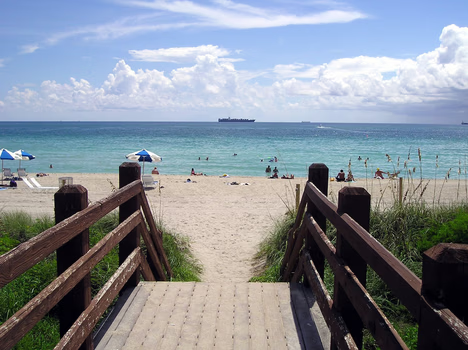
As the weekend kicked off this past Saturday, visitors strolling the iconic strip—once packed with thousands during peak spring break periods—encountered sparse foot traffic, limited music, and a subdued atmosphere more akin to a typical off-season day than the chaotic scenes of years past.
Dozens of officers patrolled the area, barricades restricted vehicle access on key streets, and parking in Art Deco District garages carried flat rates ranging from $40 to $100, with street and surface lots at $20 per hour up to a $100 daily maximum.
The measures, which the city has maintained and in some cases adjusted since declaring a “break up with spring break” following violent incidents in 2023, have effectively reduced crowd sizes even on high-impact weekends. Nonresident towing fees doubled to $548 in targeted zones, while beach entrances featured security checkpoints to screen for prohibited items.
Spring break visitors interviewed by local news reports largely viewed the lower turnout positively. One traveler described the scene as “lit” but added, “Any more people and it would be a problem,” citing a greater sense of safety amid concerns about potential risks in denser crowds.
The reduced density aligns with the city’s broader push to rebrand March as a period for wellness and family-friendly events rather than unchecked partying. While some restrictions eased this year—no full garage closures and fewer widespread barricades—the core deterrents of elevated costs and enforcement remained in place.
Miami Beach police reported 168 arrests in the spring break zone from March 2 to March 17, though no major incidents were highlighted for the latest weekend as of March 23, 2026.
City officials have not released final crowd estimates for the period, but observers noted the absence of large-scale events contributed to the quieter vibe, despite ongoing activities like fitness competitions on the beach.
The transformation has drawn mixed reactions: some businesses have complained about reduced foot traffic, while residents and officials credit the approach with restoring order and safety to South Beach.Miami officials say crowds along Ocean Drive remained strikingly thin over the second peak weekend of spring break 2026, as Miami Beach’s multi-year enforcement strategy of heavy police presence, street barricades, and steep parking fees continued to deter large gatherings of college students and partygoers.
As the weekend kicked off this past Saturday, visitors strolling the iconic strip—once packed with thousands during peak spring break periods—encountered sparse foot traffic, limited music, and a subdued atmosphere more akin to a typical off-season day than the chaotic scenes of years past.
Dozens of officers patrolled the area, barricades restricted vehicle access on key streets, and parking in Art Deco District garages carried flat rates ranging from $40 to $100, with street and surface lots at $20 per hour up to a $100 daily maximum.
The measures, which the city has maintained and in some cases adjusted since declaring a “break up with spring break” following violent incidents in 2023, have effectively reduced crowd sizes even on high-impact weekends. Nonresident towing fees doubled to $548 in targeted zones, while beach entrances featured security checkpoints to screen for prohibited items.
Spring break visitors interviewed by local news reports largely viewed the lower turnout positively. One traveler described the scene as “lit” but added, “Any more people and it would be a problem,” citing a greater sense of safety amid concerns about potential risks in denser crowds.
The reduced density aligns with the city’s broader push to rebrand March as a period for wellness and family-friendly events rather than unchecked partying. While some restrictions eased this year—no full garage closures and fewer widespread barricades—the core deterrents of elevated costs and enforcement remained in place.
Miami Beach police reported 168 arrests in the spring break zone from March 2 to March 17, though no major incidents were highlighted for the latest weekend as of March 23, 2026.
City officials have not released final crowd estimates for the period, but observers noted the absence of large-scale events contributed to the quieter vibe, despite ongoing activities like fitness competitions on the beach.
The transformation has drawn mixed reactions: some businesses have complained about reduced foot traffic, while residents and officials credit the approach with restoring order and safety to South Beach.