




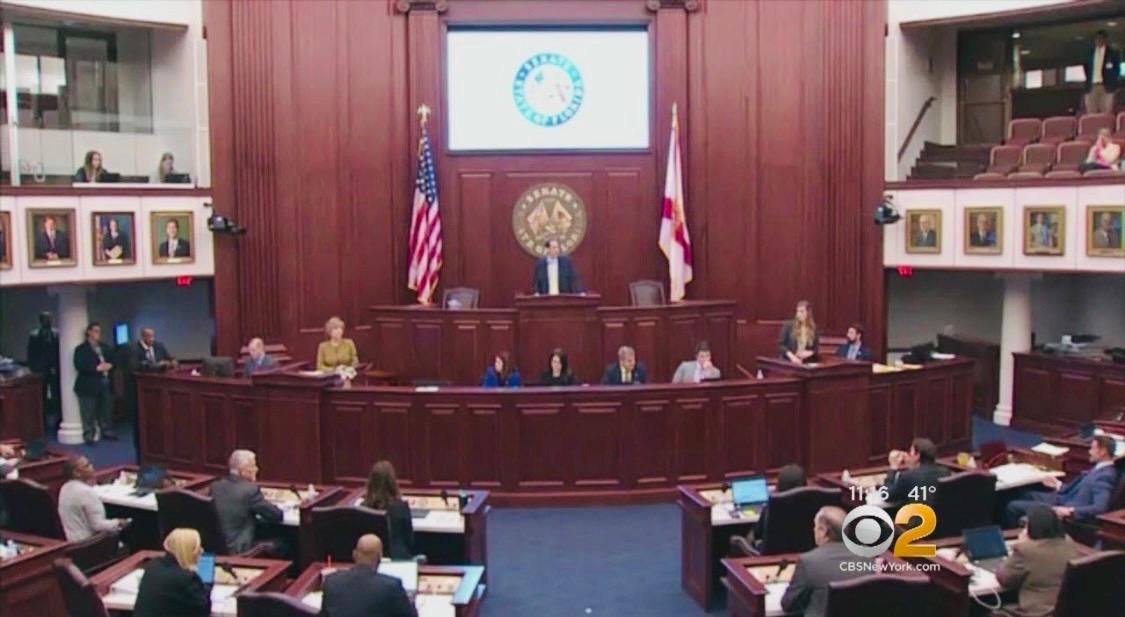
The Florida House on Thursday approved a measure allowing the state to designate domestic terrorist organizations, imposing stricter penalties and restrictions, after concurring with Senate amendments.
Lawmakers voted 80-25, largely along party lines, to pass HB 1471, titled “Systems of Law and Terrorist Organizations.” The Senate had previously approved its version 25-11.
The bill now heads to Gov. Ron DeSantis for signature.
Sponsored in the House by Rep. Hillary Cassel (R-Dania Beach) and in the Senate by Sen. Erin Grall (R-Vero Beach), the legislation creates a state-level process for designating groups as domestic or foreign terrorist organizations.
The Chief of Domestic Security (within the Florida Department of Law Enforcement) can recommend designations for groups engaged in terrorist activities that involve illegal acts dangerous to human life, or that aim to intimidate civilians, influence government policy through coercion, or affect government conduct via mass destruction, assassination, kidnapping, or aircraft piracy.
The governor and Cabinet must approve any designation by majority vote, after which it is published in the Florida Administrative Register. Designated groups face bans on receiving or providing public funds from state agencies, political subdivisions, or public school districts. Providing material support to, or willfully joining such groups with specified intent, becomes a crime subject to enhanced penalties.
The bill also prohibits Florida courts, administrative judges, hearing officers, agencies, and arbitration panels from enforcing provisions of foreign or religious law (including Sharia law) if doing so would violate constitutional rights.
A related provision requires immediate expulsion and out-of-state tuition assessment for students at Florida College System institutions or state universities determined to have promoted a designated terrorist organization.
During Thursday’s floor debate, Republicans described the measure as essential for public safety and upholding constitutional supremacy. Cassel stated that it targets conduct supporting extra-legal violence, not mere speech or sympathy.
Democrats criticized it as overly broad and ripe for abuse. Rep. Anna Eskamani (D) argued the “promote” standard remains vague and subjective. Rep. Angie Nixon (D) called it “McCarthyism” and “political repression,” accusing supporters of infringing on free speech.
Amendments narrowed the definition of “promote” to focus on statements or actions that support, approve, encourage extra-legal violence, or involve material support and recruitment.
If signed, the bill takes effect July 1, 2026.