








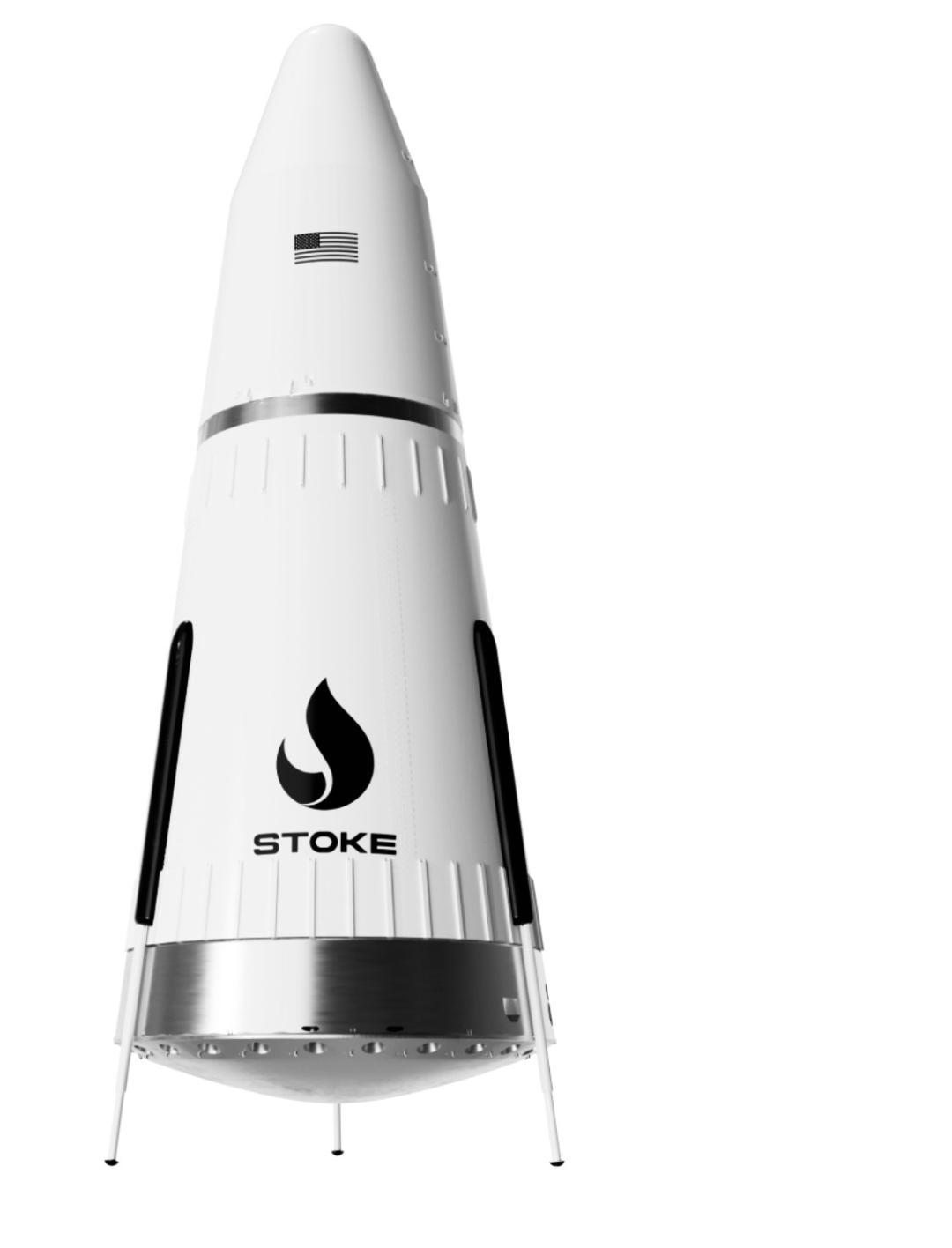
Information has surfaced that aerospace startup Stoke Space is preparing to launch its fully reusable Nova rocket from historic Launch Complex 14 at Cape Canaveral Space Force Station, the same pad that sent John Glenn into orbit in 1962 and unused for launches since 1966.
According to recent accounts, the Kent, Washington-based company has revitalized the site with new pad infrastructure, which stood ready for action as of last month. A test flight could occur possibly as soon as late 2026, with the first orbital demonstration targeted for the year.
Stoke Space, founded in 2019 by former Blue Origin engineers CEO Andy Lapsa and CTO Tom Feldman, took possession of Launch Complex 14 in March 2023. The company has conducted engine tests for Nova’s first-stage Zenith engines and flight termination systems at its Moses Lake, Washington, facility.
No company has yet achieved full reusability of both rocket stages, including SpaceX, reports indicate. Lapsa described Nova’s goal as attacking “the fully rapidly reusable space transport problem,” stating at the November 2025 Space Economy Summit in Orlando that rapid reuse would transform launch economics, availability, and reliability.
“That’s what Nova’s all about,” Lapsa said, per published reports. “Rapid reuse fundamentally changes the economics of launch, the availability of launch, and I think it also fundamentally changes the drivers of reliability. So to me, this is the inevitable end state of our industry and it’s the problem that has not quite yet been solved.”
The medium-lift Nova, designed for 100% reusability including a regeneratively cooled upper stage, aims to reduce costs dramatically and enable frequent access to orbit. Payloads for initial flights would be shipped to Florida.
Company statements and funding announcements, including a Series D round expanded to $860 million as of February 2026, support activation of the pad and scaling production toward operational launches.
No exact launch date has been confirmed, and regulatory approvals remain pending.